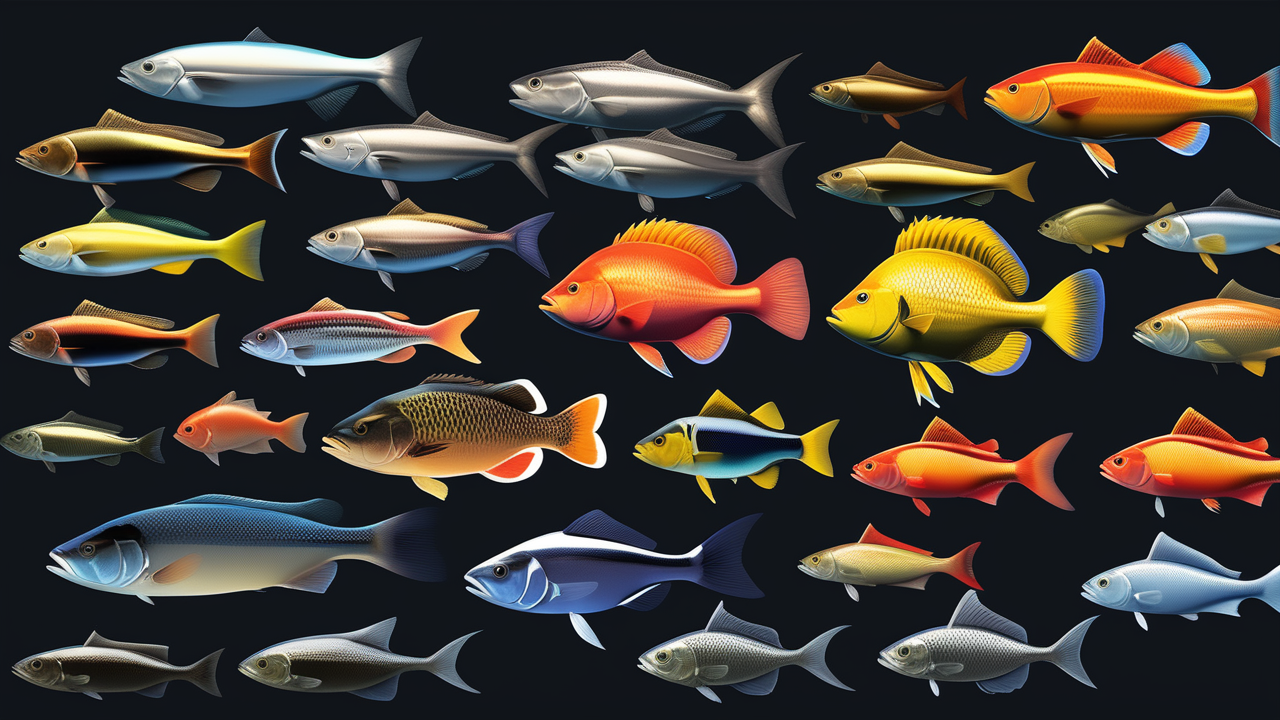
Welcome to our “Fish Guide”! Whether you’re a beginner angler or just curious about fish, this guide is here to help. Fish are fascinating creatures with diverse species to explore. We’ll walk you through the basics of identifying different types of fish, their habitats, and tips for fishing. Dive in and let’s start discovering the amazing world of fish together!
## Overview of Fish Species
Jawless lampreys are some of the oldest fish on Earth. They have a unique, eel-like body and lack the jaws found in most other fish. Instead, they have a circular, sucking mouth lined with teeth that they use to attach to other fish. These **parasitic habits** have made them a concern in many ecosystems, especially when they invade new habitats.
Bony fishes are the most diverse group, with more than 30,000 species. They have a skeleton made primarily of bone, in contrast to the cartilaginous skeleton of sharks and rays. This group includes many familiar species such as salmon, goldfish, and tuna. Their **buoyancy is controlled** by a swim bladder, an organ that allows them to maintain a desired depth without expending energy.
Cartilaginous fishes, including sharks, rays, and skates, have skeletons made of cartilage, which is lighter than bone. This makes them more flexible but less capable of supporting weight on land. These fish typically have tough, sandpaper-like skin covered with tiny tooth-like structures called dermal denticles. Many species in this group are **apex predators** and play crucial roles in marine ecosystems.
– Gill Structures and Function
– Notochord and Nerve Cord
– Fish Tail and Fin Types
– Jawless Lampreys
– Bony Fishes
– Cartilaginous Fishes
– Hearing Mechanisms
– Taste and Smell
– Vision in Water Environments
– Food Chain Dynamics
– Disease Control
– Environmental Indicators
– Overfishing Impact
– Pollution Effects
– Climate Change
– Aquariums and Aesthetic Value
– Sportfishing and Recreation
– Economic Contributions
– Ichthyology Studies
– Conservation Programs
– Sustainable Fishing Practices
## Anatomy of Fish
Fish breathe through gills, which are specialized organs that **extract oxygen from water**. Water enters through the mouth, passes over the gills, and exits through gill slits. Gills have filaments and lamellae that increase surface area, allowing **efficient gas exchange**. Without gills, fish would not be able to survive in aquatic environments.
The notochord is a flexible, rod-like structure that provides support for the fish. It is present in all fish embryos, but in adults, it is often replaced or surrounded by the vertebral column. Alongside the notochord runs the nerve cord, which is a crucial part of the central nervous system, transmitting signals between the brain and the rest of the body.
Fish tails and fins come in various shapes and serve different purposes. The caudal fin, or tail fin, is the **main propelling fin**, providing forward thrust. Pectoral fins help with steering and balance, while dorsal, anal, and pelvic fins offer stability. These adaptations allow fish to navigate their aquatic environments efficiently.
## Fish Senses
Fish have **specialized hearing mechanisms** that allow them to detect sound vibrations in the water. They use their inner ear and lateral line system to sense changes in the environment. The lateral line is a series of fluid-filled canals along the sides of their body, which helps them feel pressure changes and movement in the water. This ability is crucial for avoiding predators and finding prey.
Taste and smell are vital senses for fish. Many species have chemoreceptors located in their mouths, heads, and even along their bodies. These receptors help them detect chemicals in the water, enabling them to find food, recognize potential mates, and avoid harmful substances. Certain fish can even taste their environment by expelling water through their gills and sensing the chemical composition.
Vision in water environments can vary greatly among fish species. Some fish have excellent vision that allows them to see in low light conditions or at great depths where sunlight is scarce. They can often detect colors and see UV light, which helps them in distinguishing different prey or mates. The structure of a fish’s eyes is **adapted to focus on light** that travels through water, which is different from how light behaves in air.
## Fish Habitat and Distribution
Freshwater habitats are home to species that live in rivers, lakes, and ponds. These environments provide essential nutrients and shelter for fish. Different species thrive in various freshwater conditions, including **cold, fast-moving streams** and warm, still waters. Freshwater fish must adapt to stable but sometimes changing conditions, including seasonal variations and human-made changes such as dams and pollution.
Saltwater habitats include vast oceans and seas, where fish often live in more stable conditions compared to freshwater. Marine fish can be found in coastal areas, coral reefs, and deep-sea environments. Each zone supports different species, adapted to their specific surroundings. While the coastal areas are rich in nutrients and support a variety of life forms, the deeper regions are home to species that withstand **high pressure and low light**.
Many species follow migratory patterns that are **essential for their lifecycle**. Some fish migrate from freshwater to saltwater, or vice versa, to spawn or find food. Salmon, for example, are known to travel vast distances from the ocean upstream to rivers to reproduce. Understanding these patterns is important for conservation efforts and maintaining ecological balance. Migration helps ensure genetic diversity and the survival of various species.
| Habitat Type | Characteristics | Common Species |
|---|---|---|
| Freshwater Habitats | Lakes, Rivers, Streams | Trout, Bass, Catfish |
| Saltwater Habitats | Oceans, Coral Reefs, Estuaries | Clownfish, Tuna, Flounder |
| Migratory Patterns | Seasonal movement between habitats | Salmon, Eel, Herring |
## Role of Fish in Ecosystems
Fish play a critical part in the food chain. They consume both plants and smaller animals, making them **key middlemen in aquatic environments**. By regulating populations of organisms below them, they help maintain balance and prevent any one species from overwhelming an ecosystem. Predatory fish also control populations of smaller fish and invertebrates, ensuring that these species do not grow excessively and disrupt the environment.
Fish contribute to disease control within their habitats. Many fish feed on unhealthy or diseased organisms. This prevents the spread of disease by removing infected animals from the population. By doing so, fish **help keep the ecosystem** healthier and more stable. Without these natural regulators, diseases could potentially spread unchecked and cause significant harm to various species, including those beyond aquatic environments.
Fish serve as environmental indicators. Changes in fish populations can **signal alterations in water quality** or the overall health of an ecosystem. For instance, a decline in a certain species can indicate pollution or habitat destruction. By monitoring fish populations and their behaviors, scientists and conservationists can detect early signs of environmental issues. This information is vital for initiating timely actions to protect and restore ecosystems.
## Threats to Fish Populations
Overfishing is one of the biggest **threats to fish populations**. Many fish species are caught at a rate faster than they can reproduce, leading to dwindling numbers. This practice not only reduces the diversity of marine life but also impacts the livelihoods of communities that rely on fishing for income and food. It’s essential to implement **sustainable fishing practices** to ensure fish populations can recover and thrive.
Pollution has a detrimental effect on marine life. Waste from factories, oil spills, and plastic debris contaminate the waters, harming fish and the ecosystems they inhabit. Pollutants can cause diseases, disrupt reproductive systems, and make fish unsafe for human consumption. Reducing pollution requires global cooperation and stricter regulations to keep waters clean and safe for all aquatic life.
Climate change is altering the habitats and living conditions of fish. Rising temperatures and changing ocean currents affect migration patterns, breeding cycles, and food availability. Coral reefs, which are vital for many fish species, are under threat from ocean warming and acidification. Addressing climate change is critical to protect the complexity of marine ecosystems and ensure that fish species can adapt and survive.
## Fish in Human Culture
Aquariums have become a cherished addition to many homes and public spaces, offering both aesthetic beauty and a sense of peace. Watching fish gracefully swim can be a relaxing experience, helping to **reduce stress and improve** mental well-being. The vivid colors and diverse species of fish in aquariums create a miniature ecosystem that fascinates people of all ages, making them **a popular hobby** and a centerpiece in interior decoration.
Sportfishing provides a blend of excitement and tranquility, drawing millions of enthusiasts worldwide. It’s not just about the thrill of the catch but also the time spent in nature, often leading to a deeper appreciation of the environment. This recreation promotes social bonds, whether it’s a quiet solo trip or a competitive event with friends or family. Moreover, it has a positive impact on mental health, offering an escape from the daily hustle and the chance to reconnect with nature.
The economic contributions of fishing are significant, supporting industries from local fisheries to global seafood markets. Communities around the world rely on fishing as a primary source of income and employment. This sector includes not only the act of fishing but also processing, transportation, and retail, collectively forming a vital part of the global economy. In addition, responsible fishing practices and sustainable management of fish stocks ensure long-term benefits for both the economy and the environment.
## Research and Conservation Efforts
Ichthyology, the **study of fish**, has seen extensive development as scientists work to understand the diverse species and ecosystems that exist underwater. These studies not only help in identifying new species but also in understanding their behavior, habitats, and interactions within marine ecosystems. This knowledge is crucial for formulating effective conservation strategies and protecting biodiversity in aquatic environments.
Conservation programs play a pivotal role in **protecting fish populations** and their habitats. These programs often involve habitat restoration, establishment of marine protected areas, and initiatives to combat pollution and overfishing. Collaborative efforts between governments, NGOs, and local communities ensure that conservation measures are practical and sustainable, helping to safeguard marine life for future generations.
Sustainable fishing practices are essential for maintaining fish stocks and the health of marine ecosystems. Techniques such as regulated quotas, selective fishing gear, and seasonal restrictions help reduce overfishing and bycatch. Educating fishermen about responsible practices and encouraging the consumption of sustainably sourced fish are also key components in promoting a balanced relationship between human needs and marine conservation.


## Frequently Asked Questions
#### 1. What are the most common types of fish people keep as pets?
The most common types of fish people keep as pets include goldfish, bettas, guppies, tetras, and angelfish.
#### 2. How do I know if my fish is healthy?
A healthy fish is active, has clear eyes, a regular appetite, and vibrant colors. It’s also free of spots, sores, or frayed fins.
#### 3. What kind of tank setup is best for beginner fish keepers?
A good starter tank for beginners is a 10-20 gallon aquarium with a filter, heater (if needed), proper lighting, and basic decorations.
#### 4. How often should I feed my pet fish?
Most pet fish do well with feeding once or twice a day. Feed them only what they can eat in 2-3 minutes to avoid overfeeding.
#### 5. Why is water quality important in a fish tank?
Good water quality is crucial because it keeps fish healthy by preventing diseases and stress. Regular water changes and tank maintenance help maintain water quality.
TL;DR: This Fish Guide provides an in-depth look into various fish species, their anatomy, and sensory capabilities. It covers fish habitats, both freshwater and saltwater, and their global distribution. The role of fish in ecosystems is explored, including their part in food chains and disease control. Threats like overfishing, pollution, and climate change are discussed. The guide also delves into fish in human culture, from aquariums to their economic value. It highlights research and conservation efforts, including ichthyology studies and sustainable fishing.