Virtual Reality (VR) is transforming how we engage with digital worlds. By creating simulated 3D environments, this technology lets users immerse themselves in spaces that feel strikingly real, often through special goggles or headsets. There are different types of VR, ranging from non-immersive experiences like video games to fully immersive ones that require advanced equipment. Notably, augmented and mixed realities blend digital elements with our physical world, offering exciting possibilities. As VR evolves, its uses expand across gaming, education, healthcare, and more, providing unique opportunities for interaction, training, and entertainment. As industries experiment with VR applications, we’re glimpsing a future where the line between real and virtual becomes ever blurrier.
What is Virtual Reality?
 ?
?
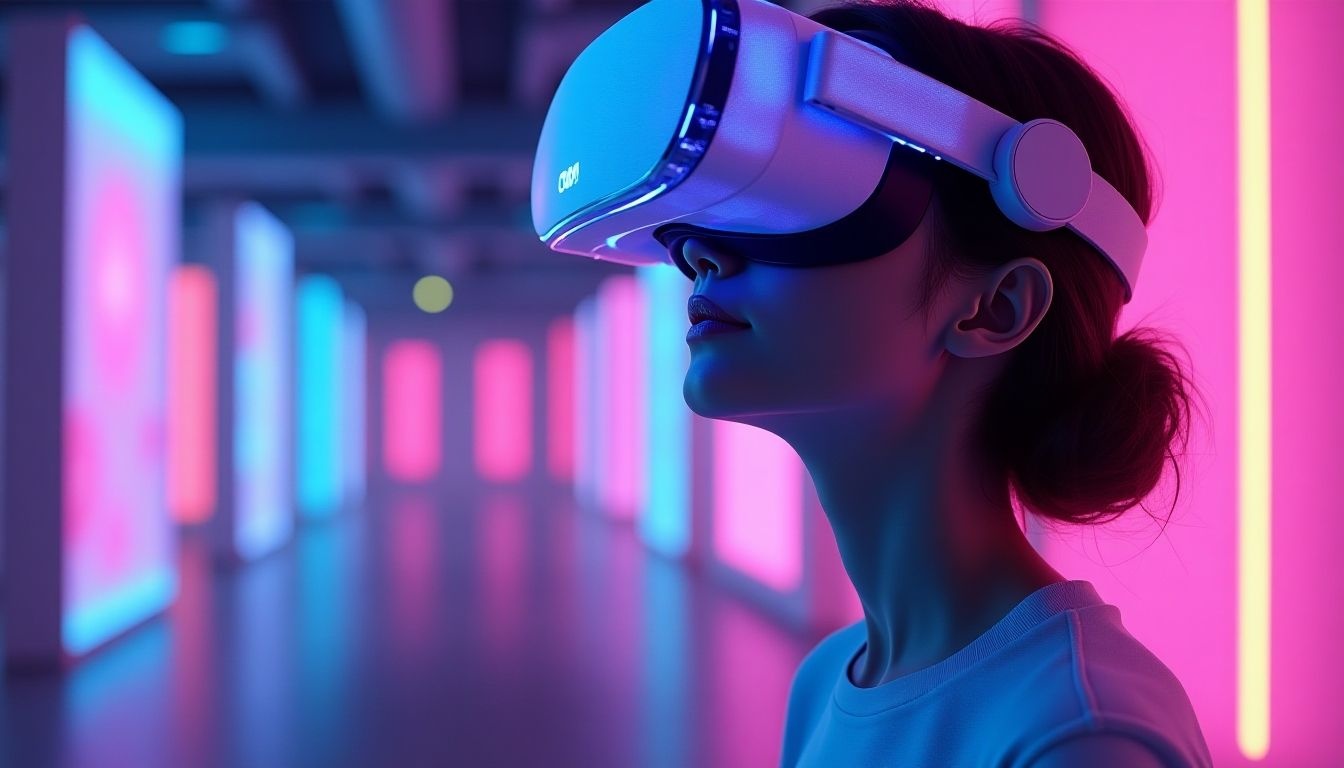
Virtual Reality (VR) is a tech-driven simulated experience that transports users into a three-dimensional world, distinct from the real one. At its core, VR uses a headset to immerse users, allowing them to explore and interact with a digital environment. This immersive experience can engage multiple senses, such as sight and sound, and sometimes even touch, creating a realistic sensation of being in another world. Advanced VR setups incorporate motion tracking to mirror a user’s physical movements, enhancing the feeling of presence within the virtual space. For example, in a VR game, a player might physically turn their head or move their hand, and the virtual environment responds accordingly. This technology is not just limited to gaming; it’s becoming increasingly popular in fields like education, where students can explore historical sites, or in medicine, where surgeons practice procedures in a risk-free setting. VR experiences can be solo or shared with others in a virtual setting, but they often require powerful computing hardware to ensure smooth and immersive environments. While VR is sometimes confused with augmented reality (AR), which overlays digital content onto the real world, VR provides a fully immersive experience that can be entirely different from our physical surroundings.
Types of Virtual Reality
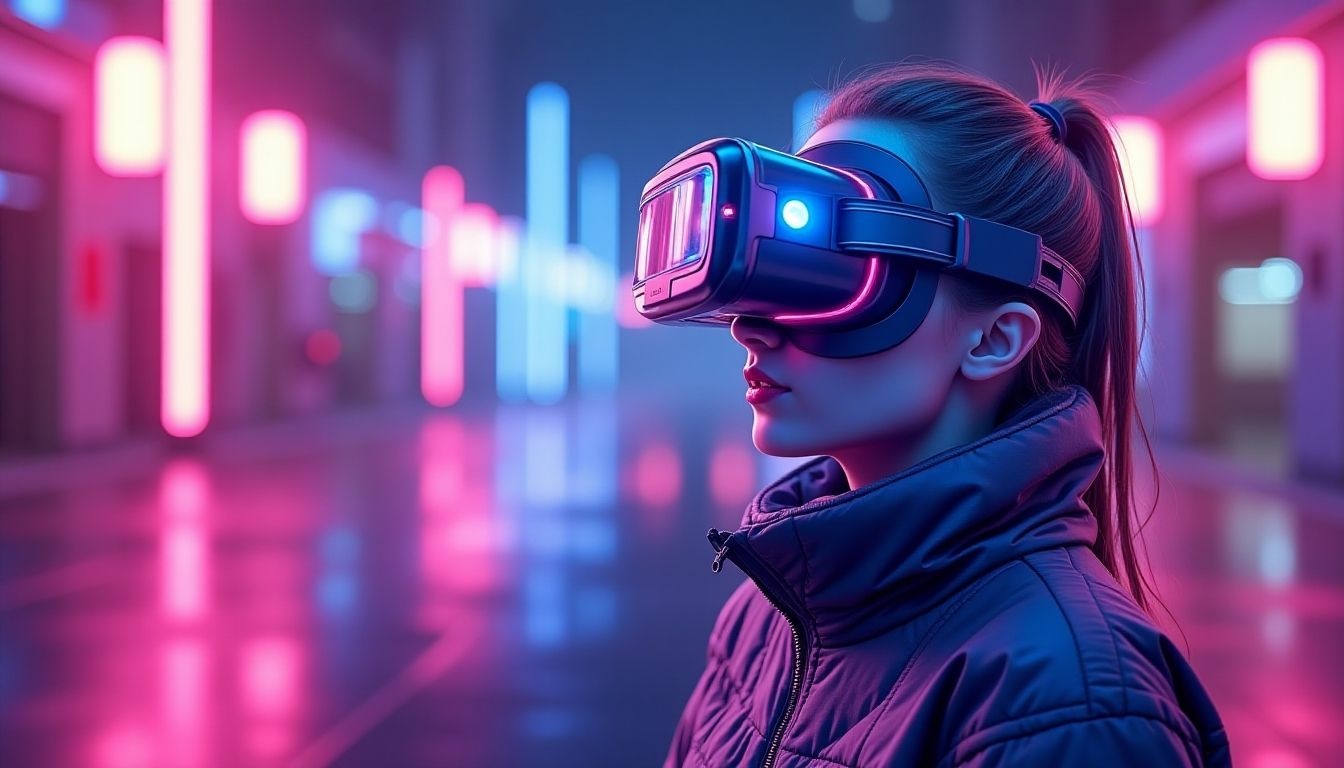
Virtual reality comes in various forms, each offering a different level of immersion and interaction. Non-immersive VR involves using a traditional screen to experience a computer-generated environment, much like video games played on a console or PC. Semi-immersive VR takes it a step further, often utilizing large displays or simulators to create a more engaging experience. For a more authentic feel, fully immersive VR employs head-mounted displays and motion tracking to transport users into a completely virtual world, enabling them to interact with their surroundings as if they were real.
While augmented reality (AR) and mixed reality (MR) are often mentioned alongside VR, they serve distinct purposes. AR overlays digital objects onto the real world, whereas MR blends real and virtual elements, allowing users to interact with both simultaneously. Collaborative VR permits multiple users to engage in the same virtual environment, often used in training or social applications.
Access to VR is becoming more versatile with the advent of web-based VR, which is accessible through a web browser without specialized software. Mobile VR uses smartphones paired with simple headsets to provide a basic VR experience, making it more accessible to the general public. Desktop VR, on the other hand, relies on powerful PCs and headsets to offer high-quality immersive experiences. Additionally, room-scale VR uses sensors in a dedicated area, enabling users to walk around and interact with the virtual environment physically.
| Type | Description |
|---|---|
| Non-immersive VR | Involves a computer-generated environment that can be interacted with on a traditional screen. |
| Semi-immersive VR | Provides a partial virtual experience, often using large displays or simulators. |
| Fully immersive VR | Offers the most realistic experience, typically with a head-mounted display and motion tracking. |
| Augmented reality (AR) | Overlays virtual objects onto the real world and is not considered true VR. |
| Mixed reality (MR) | Blends real and digital elements, allowing interaction with both simultaneously. |
| Collaborative VR | Allows multiple users to interact in the same virtual space. |
| Web-based VR | Accessible directly from a web browser without the need for specialized software. |
| Mobile VR | Uses smartphones and simple headsets to deliver a basic VR experience. |
| Desktop VR | Involves powerful PCs and headsets for high-quality experiences. |
| Room-scale VR | Uses sensors in a dedicated space to allow users to move freely within an environment. |
Features of Virtual Reality
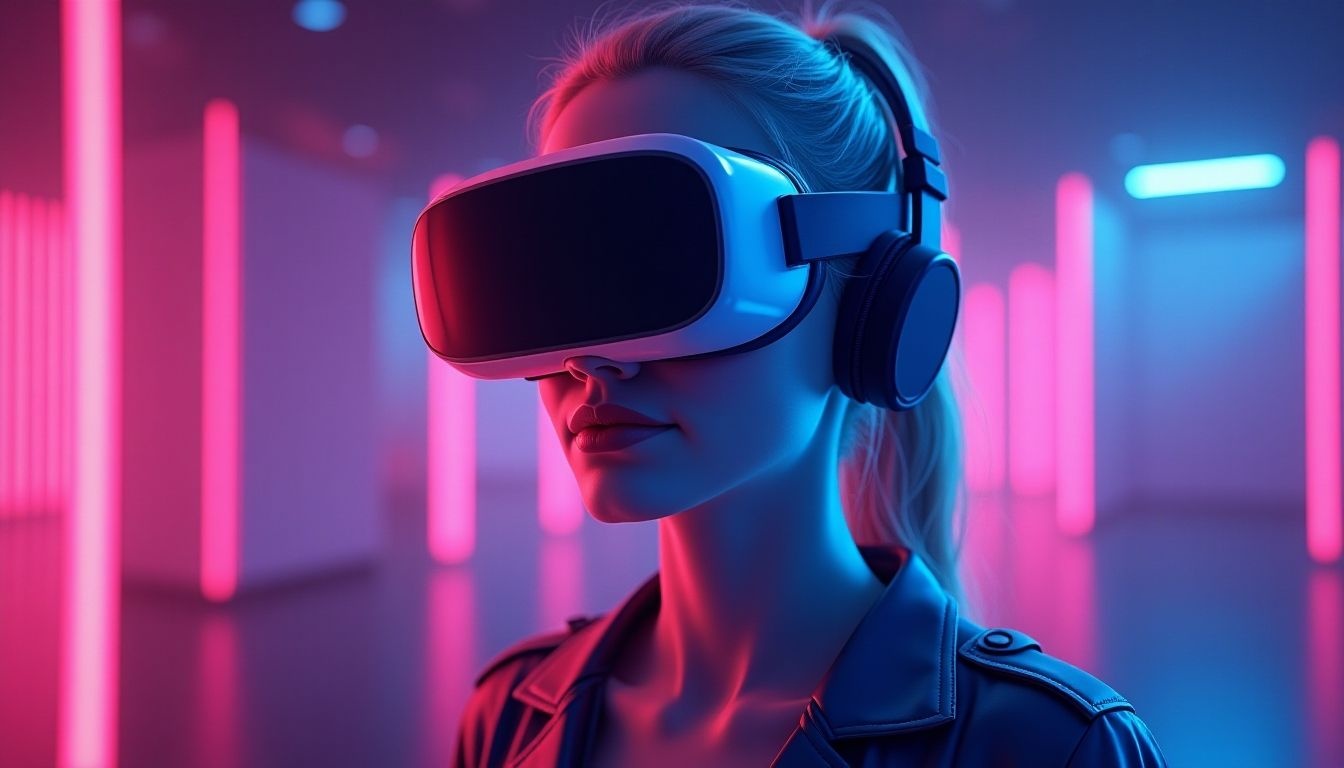
Virtual reality (VR) technology is built on several key features that create a highly immersive experience for users. Immersive graphics transport users into another world, making them feel as if they’re genuinely part of the virtual environment. Accompanying these visuals, spatial audio plays a crucial role by providing sound from different directions, enhancing the sense of realism. Haptic feedback adds another layer by simulating the sense of touch or vibrations, allowing users to feel virtual interactions.
Head tracking is an essential feature that allows users to naturally change their viewpoint by simply moving their heads, thus deepening the immersive experience. Coupled with motion controllers, users can interact with the virtual world in a natural and intuitive manner, similar to how they would in the real world.
Real-time rendering is vital as it ensures that any user input is reflected instantly in the virtual environment, maintaining the flow of interaction. A wide field of view (FOV) is crucial for a comprehensive experience, although it varies between different VR systems. To keep the illusion seamless, latency—the delay between a user’s action and its representation on screen—has to be minimal.
A high frame rate is necessary for smooth visuals, reducing motion sickness and providing a more pleasant experience. Lastly, safety features are often integrated to prevent users from bumping into real-world obstacles, ensuring a safe exploration of virtual environments.
Uses of Virtual Reality
Virtual reality is transforming various fields with its immersive capabilities. In education, it offers interactive learning experiences, allowing students to explore subjects in a more engaging way. For instance, history classes can include virtual visits to ancient civilizations, making learning more vivid. In healthcare, VR is pivotal for surgical training, therapy, and even pain management. Surgeons can practice complex procedures in a risk-free environment, enhancing their skills.
The entertainment sector, too, has embraced VR, revolutionizing gaming and movie experiences. Virtual concerts allow fans to enjoy live performances from the comfort of their homes. Meanwhile, architecture and real estate professionals use VR to provide virtual tours and visualize design concepts, helping clients understand projects better.
Training simulations in industries like aviation and military benefit significantly, offering realistic scenarios without real-world risks. Retail businesses are creating virtual shopping experiences, allowing customers to try products digitally before purchasing. In sports, VR aids in training, performance analysis, and increasing fan engagement through immersive experiences.
Tourism has also adopted VR to offer virtual visits to places that might be too far or inaccessible, expanding possibilities for exploration. The automotive industry uses VR for vehicle prototyping and design testing, reducing time and cost. Finally, in social networking, VR enables virtual meetups and collaborative workspaces, making remote interactions more personal.
- In education, VR provides interactive and immersive learning experiences.
- In healthcare, VR is used for surgical training, therapy, and pain management.
- The entertainment industry uses VR for gaming, movies, and virtual concerts.
- In architecture and real estate, VR enables virtual tours and design visualization.
- VR assists in training simulations for industries like aviation and military.
- Retail businesses use VR to create virtual shopping experiences and product demos.
- In sports, VR helps in training, performance analysis, and fan engagement.
- VR is used in tourism to offer virtual visits to distant or inaccessible locations.
- The automotive industry uses VR for vehicle prototyping and design testing.
- In social networking, VR facilitates virtual meetups and collaborative workspaces.
The Future of Virtual Reality
The future of virtual reality looks promising with several technological advancements on the horizon. One major development is the creation of more lightweight and comfortable VR headsets, making it easier for users to engage for extended periods. As graphics and processing power improve, virtual environments will become even more realistic, enhancing user immersion. Moreover, the integration of artificial intelligence will allow for more personalized experiences, tailoring content to individual preferences.
Augmented reality applications are expected to further blur the lines between the virtual and real world, offering unique interactive experiences. The rollout of 5G networks will provide faster and more reliable connections, facilitating seamless VR streaming and interaction. In the workplace, VR is poised to play a significant role in remote work and virtual collaboration, making it a valuable tool for businesses.
Accessibility is also becoming a priority, with efforts to make VR inclusive for all users, regardless of physical or cognitive abilities. Education is another area ripe for transformation; VR could revolutionize learning by offering immersive and interactive platforms that engage students in entirely new ways.
Social interactions in virtual reality might evolve into fully-realized virtual societies, complete with their own economies and cultures. Additionally, emerging technologies such as brain-computer interfaces could introduce novel methods of interaction within these digital spaces. As these developments unfold, virtual reality is set to become an integral part of our daily lives, influencing numerous aspects of society.
Frequently Asked Questions
1. What is virtual reality and why is it important?
Virtual reality is a technology that creates a simulated environment you can interact with using special gear like headsets. It’s important because it can change how we learn, play, and work by providing immersive experiences.
2. How do virtual reality headsets work?
Virtual reality headsets work by using screens and sensors to block out the real world and show you digital content. They track your movements, so when you move your head, the view in the headset changes like you are actually in the virtual environment.
3. Can virtual reality be used for education?
Yes, virtual reality can be used for education by giving students hands-on experiences. For example, they can explore historical sites, conduct science experiments, or practice new skills in a virtual space that would be hard to access otherwise.
4. What are some surprising uses of virtual reality?
Some surprising uses of virtual reality include therapy for mental health, training for surgeons, designing houses, and even helping people overcome phobias by gradually exposing them to their fears in a controlled setting.
5. What might the future of virtual reality look like?
The future of virtual reality might include more advanced and affordable headsets, better graphics, and more realistic interactions. It could become common in fields like remote work, social experiences, and entertainment, making virtual reality a bigger part of everyday life.
TL;DR Virtual Reality (VR) is a simulated experience offering various levels of immersion, from basic mobile setups to sophisticated room-scale systems. VR features include immersive graphics, spatial audio, and motion tracking, making it suitable for diverse applications like gaming, education, and healthcare. It is distinct from augmented reality (AR) and mixed reality (MR). VR’s future promises more realistic experiences with improvements in hardware, artificial intelligence integration, and network technologies like 5G. As society increasingly embraces VR, it is expected to play a significant role in remote work, social interaction, and online education.